Custom Personalized Leather Belts Made in the USA: Craftsmanship, Quality, and Style
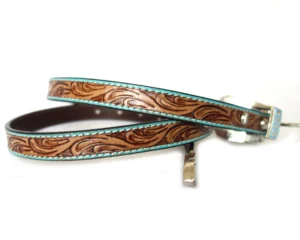
Investing in custom leather belts USA is an investment in durability, everyday utility, and individual identity. In a modern market flooded with fast fashion, mass manufacturing, and synthetic imitations, the demand for authentic, American-made leather goods continues to rise. A bespoke belt made by domestic craftsmen delivers an heirloom-quality accessory designed to age gracefully over decades of wear.
1. The Heritage of Custom Personalized Leather Belts in the USA
American leathercraft carries a rich tradition rooted in saddlery, utilitarian work gear, and equestrian trades. Historically, belts and harnesses were built to withstand harsh outdoor labor and unpredictable weather.
Why buying American-made leather goods matters:
-
Ethical Production and Fair Labor: US-based workshops operate under strict labor regulations, providing fair wages and safe working environments.
-
Traceable Tannery Sourcing: Top domestic makers source raw hides directly from historic American tanneries such as Leather Company and Wickett & Craig.
-
Uncompromising Standards: American artisans use solid brass, stainless steel, and un-split hides rather than cheap synthetic substitutes. Learn more about our manufacturing philosophy on our About Us Page.
2. Leather Grades: Choosing Quality for Custom Personalized Leather Belts
-
Full-Grain Leather: The gold standard. Retains the entire natural grain layer, delivering maximum tensile strength, breathability, and rich patina development.
-
Top-Grain Leather: Sanded lightly to remove surface blemishes. Thinner and more uniform, but lacks long-term fiber strength.
-
Genuine/Split Leather: Lower fibrous layers coated in polyurethane (PU). Prone to stretching and cracking.
-
Bonded Leather: Shredded scrap fibers glued with plastic adhesives. Common in fast-fashion items.
3. Vegetable Tanning vs. Chrome Tanning
The tanning method determines how custom personalized leather belts age, feel, and retain custom impressions.
-
Vegetable Tanning (Veg-Tan): An organic, 6-to-12-week process using natural tannins from tree bark. It yields dense, firm hides that accept sharp monograms, edge burnishing, and deep tooling. It is the premier choice for bespoke leather goods.
-
Chrome Tanning: A chemical-based method completed in 24 to 48 hours using chromium salts. It yields supple, water-resistant leather ideal for jackets, but it does not hold stamped impressions as sharply as vegetable-tanned hides.
4. Personalization Options for Custom Leather Belts
Personalizing a leather belt allows you to configure exact aesthetics, sizing, and daily functionality.
-
Blind Debossing & Foil Stamping: Heat-pressed dies leave deep, permanent impressions without ink, or apply gold/silver foils for high-visibility monogramming.
-
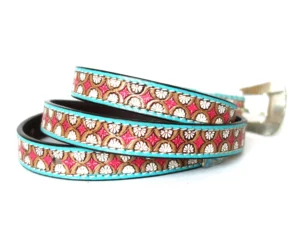
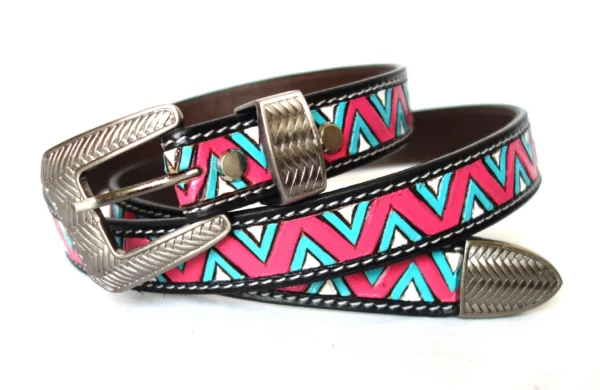
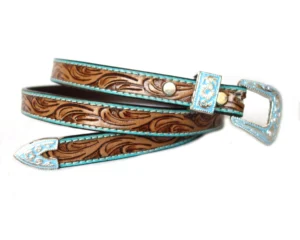
Custom Tooling: Hand-carved Sheridan floral patterns, geometric basket-weaves, and stitched border grooves.
-
Thickness & Weight (Ounces):
-
8–9 oz (3.2–3.6 mm): Lightweight formal dress belts.
-
10–12 oz (4.0–4.8 mm): Standard everyday casual wear.
-
14–16 oz (5.6–6.4 mm): Dual-layer heavy-duty gun and work belts. Explore available weights in our Custom Belt Collection.
-
5. Hardware Selection: Built for Longevity
A custom strap requires rugged hardware that will not snap under tension.
-
Solid Brass: Heavy, rust-proof, and oxidizes naturally to complement aging leather.
-
Stainless Steel: Corrosion-resistant and hypoallergenic, ideal for humid environments.
-
Attachment Methods: Choose removable Chicago screws for easy buckle swaps, heavy-duty snaps, or permanent saddle stitching for a sleek profile.
6. How to Measure Your True Belt Size
Pant sizes use vanity sizing and do not reflect accurate belt length. Always measure an existing belt for an exact fit.
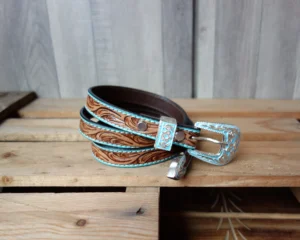
[Buckle Fold / Pin]==============================[Current Hole]----[Tip]
|<----------------- TRUE BELT SIZE ------------->|
                   (e.g., 36 inches)
-
Lay an existing, well-fitting belt flat on a hard surface.
-
Measure from the inside edge of the buckle (where the prong rests) to the hole you use most often.
-
Do not measure to the end of the belt tip.
-
Alternative method: Add 2 inches to your standard off-the-rack pant waist size (e.g., a size 34 pant generally takes a size 36 belt).
7. Caring for Your Custom Leather Belt
Keep full-grain leather hydrated and supple with a straightforward care routine:
-
Clean: Wipe away dirt using a damp microfiber cloth with distilled water or mild glycerin saddle soap.
-
Condition: Apply pure neatsfoot oil, beeswax balm, or Bick 4 once or twice a year to replenish natural oils.
-
Storage: Hang vertically from the buckle on a rack or coil loosely in a dry, ventilated area.