
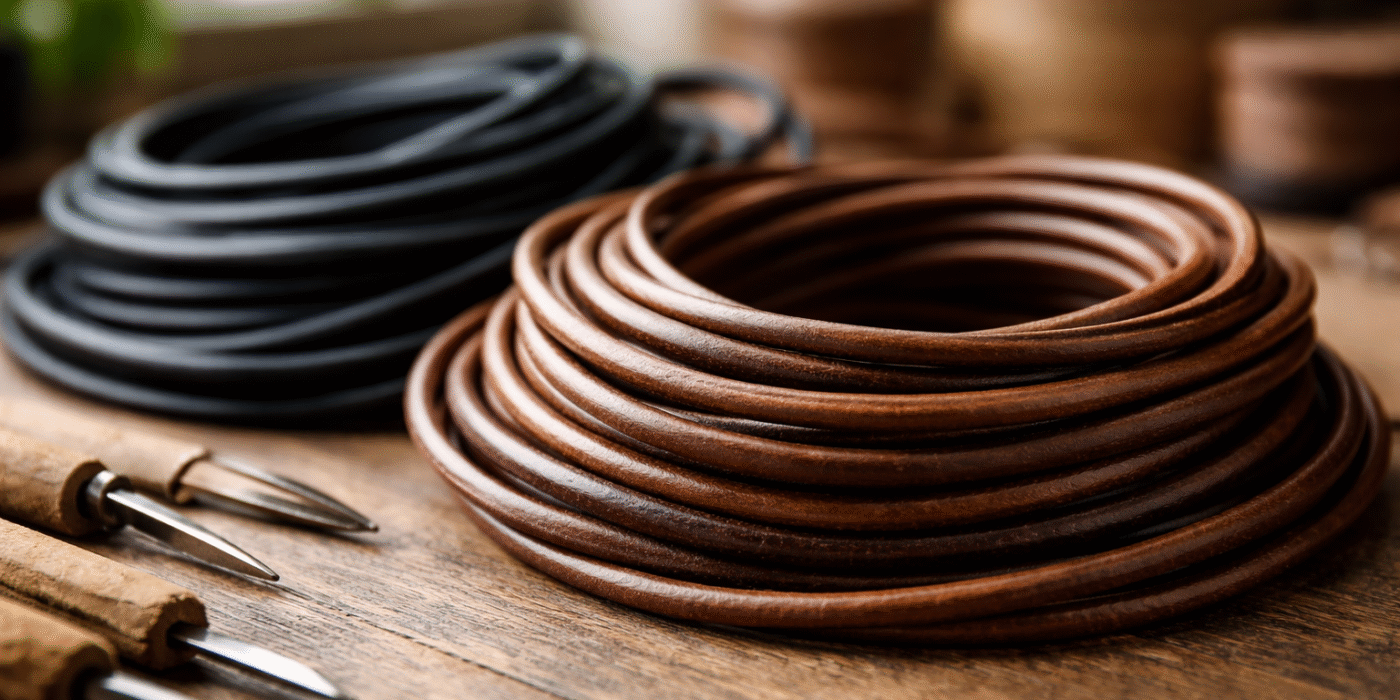
If you’re into DIY jewellery — simple bracelets, rustic chokers, or hand-stamped pendants — nothing beats the tactile, natural vibe of real leather. In this guide I’ll walk you through everything you need to know about round leather cord for jewelry making Germany: what sizes pass for what projects, how much you’ll pay, and the best places to pick it up without breaking the bank.
First off: why pick round leather cord? It’s strong, knots nicely, and gives a clean, classic finish that flat leather or cotton just can’t match. Whether you’re threading beads, using crimps, or making adjustable sliding knots, round leather gives a polished look with a handmade soul.
Common sizes (and what to use them for)
Round leather cord comes in tiny differences but those millimetres matter. Here’s a quick cheat-sheet that makers swear by:
-
1.0 mm — delicate cords for tiny clasps, seed-bead necklaces, or thin metal closures. Great when you want something subtle.
-
1.5 mm — the goldilocks for small pendants and beaded bracelets. Works well with small crimps.
-
2.0 mm — the most versatile size; perfect for most necklaces and bracelets, and it pairs with standard cord ends and split rings. Several popular suppliers stock 2 mm heavily.
-
3.0 mm —chunkier look, great for men’s bracelets, bolo-style cords, and statement pieces. Often sold in pre-cut lengths (1m, 5m, 25m).
-
4–5 mm — for wrap bracelets or rustic chokers. These require larger findings and a bit more confidence with knots.
If you’re in doubt, grab a small sampler pack with 1.5, 2, and 3 mm to test — many shops sell sample reels or short lengths so you can check colour and flexibility before committing. Online marketplaces and craft stores commonly list exact diameters and lengths so you can match findings precisely.
Leather types and finish
Most round cords you’ll see are cowhide (buffed or smooth), suede (fuzzy on the outside), or braided leather (tighter, stronger). Natural undyed leather will age beautifully, while dyed cords come in every shade. For high-end jewellery, look for full-grain or calfskin cords; for casual or craft projects, standard cowhide rounds are fine and much cheaper.
Prices — what to expect in Germany
Pricing varies a lot depending on diameter, leather quality, length and seller. To give you a sense:
-
Single metres or short lengths (1–5 m) of basic 1.5–2 mm round leather often start around €0.45–€2.50 per metre for mass-produced cord. eBay listings and smaller sellers commonly list cords in this price range.
-
Packaged bundles (5–25 m) or branded cords on marketplaces like Amazon can range from €3–€18 depending on diameter and packaging (e.g., 10–25 m spools). Some 2 mm 100 m rolls are extremely cheap per meter — great if you make a lot.
-
Premium, specialty, or braided bolo cords (higher-grade leather) can be €15–€30 for small quantities (10 yards etc.). If you want reptile-embossed or hand-finished leather, expect higher pricing.
Tip: If you’re making for sale, buy spools or wholesale lots — price per meter drops a lot when you buy 50–100 m.
Where to buy in Germany (online + brick-and-mortar)
You’ve got options — big marketplaces, specialist bead suppliers, craft chains, and independent leather shops. Here are reliable places to check:
-
Creative- Leathers — huge selection, everything from 1 mm to 8 mm, plus fast shipping if you’re Prime. Look for spool lengths and customer photos to judge colour and thickness.
-
Etsy — excellent for artisan-quality and small-batch sellers in Europe; great for unusual colours or braided leather. You can often message sellers for custom lengths.
-
eBay Germany — good for super-cheap single metres or bulk lots from smaller sellers. Shipping varies but you can find bargains.
-
Local craft chains and hobby shops (e.g., idea / idee-shop) — real-life handling is unbeatable: feel the texture, test flexibility, and spot the exact colour under natural light. Many German craft retailers stock 1.5 mm and 2 mm leather cord from brands like Rico Design.
-
Specialist bead suppliers and leather wholesalers (online) — shops like Creative-Leathers and other bead wholesalers sell quality leather cord in many diameters and sell wholesale prices if you need large amounts.
If you like to shop physically, look for local craft fairs, maker markets, or independent leather shops in city centres — bargaining for small volume or picking up unique colours is easier in person.
Buying tips (so you don’t regret it)
-
Always check diameter versus the size of your findings (end caps, crimps, clasps). Suppliers sometimes list “about 2 mm” — real-world measurement can vary.
-
Check the return policy and look at customer photos. Leather colours in photos sometimes look different because of studio lighting.
-
When buying dyed leather, ask about colourfastness if you expect it to contact skin or sweat.
-
Consider pre-waxed or pre-treated cords for longevity; otherwise, a light beeswax treatment can protect the leather.
-
Buy a small spool first if you’re testing a new supplier — then scale up when you like it.
Quick DIY hacks
-
For secure ends on round leather, use tube end crimps with glue or bead caps that fit the diameter. For 2 mm cords, small crimp end caps are widely available.
-
Make sliding knots on 2–3 mm cords for adjustable necklaces — they hold well and look neat.
-
For an aged look, rub a little leather balm selectively to darken areas — it ages the cord naturally.
Final thoughts
Whether you’re making simple bead necklaces or launching a jewellery line, round leather cord for jewelry making Germany is easy to source and comes in sizes for every project. Start with a 2 mm trial spool, test a few colours (natural, black, and one accent), and once you know the finish you like, go bulk to save. Happy crafting — and if you want, tell me what piece you’re planning and I’ll recommend the exact diameter, colour and end-finding to match.