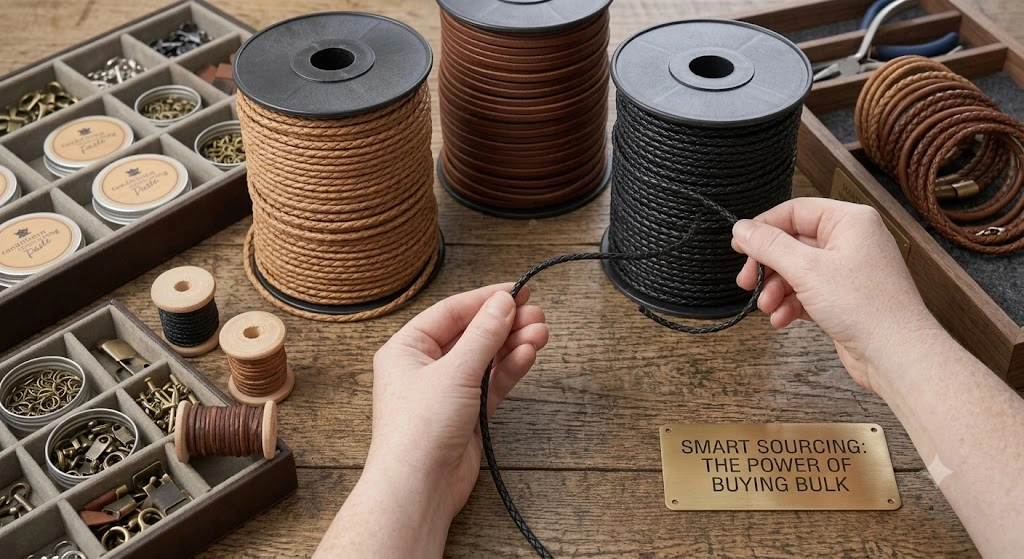
Large spools of black and brown braided leather cord bulk stock

Braided Leather Cord UK

Hands working with braided leather cords in UK workshop
Exploring different profiles and styles of braided leather cords.

The Ultimate Guide to Braided Leather Cord in the UK: Crafting, Sourcing, and Style Trends
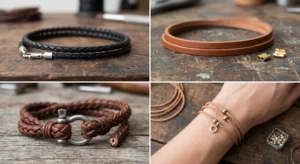
Whether you are crafting a rugged men’s wristband, stringing together a bohemian pendant, or pulling together custom handles for a handcrafted tote bag, finding high-quality Leather Cords in UK craft markets is essential for any maker project. There is something deeply satisfying about working with natural, textured materials—it brings a weight, warmth, tactile character, and flexibility that synthetic cords, nylon threads, or cheap plastic imitations simply cannot match.

If you have ever spent an afternoon browsing online craft supply stores or wandering through local UK artisan markets looking for quality Leather Cords in UK for your next big build or jewelry repair, you have probably realized that not all leather is created equal. From wide flat profiles to chunky multi-strand round weaves, getting the right material and thickness can make or break your entire design.

In this comprehensive guide, we are going to dive deep into everything you need to know about working with, choosing, styling, and preserving braided leather. We will also look at how to source top-tier material in the UK without hitting a quality wall or wasting your budget.

What Makes Braided Leather Cord So Special?

Before we look at sizes and crafting techniques, it is worth asking: why choose braided leather over smooth single-strand leather strips or plain round cords?

While a single smooth strand of leather looks clean, structured, and minimal, braided leather introduces a totally different dynamic and aesthetic energy to any project.
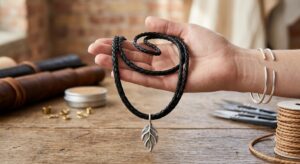
Black woven necklace with leaf pendant drape test on wooden table
Braided leather offers exceptional flexibility and a smooth, natural drape.

1. Superior Flexibility and Natural Drape

leather cord in UK Single-strand thick leather can feel remarkably stiff, especially at higher diameters like 4mm or 6mm. It takes weeks—sometimes months—of continuous wear to break in a solid strip of thick leather. Braids, on the other hand, are inherently supple. By weaving multiple thin, pliable strips of hide around a core, the cord gains immediate flexibility. It drapes naturally around the curves of a neck or wrist from day one without biting into the skin or feeling rigid.
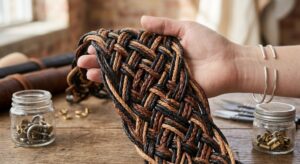
Close up view of multi strand tan and brown interwoven craft material
The interlocked multi-strand weave adds rich visual depth and texture.

2. Rich Dimensional Texture

The interlocked pattern of a woven braid catches light and shadow in a unique way. As you turn a braided piece under natural sunlight, the weave reflects subtly different tones depending on how individual strands were cut and dyed. This creates a visual depth and vintage appeal that plain flat leather simply cannot emulate.
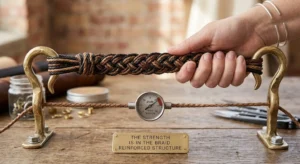
Tension gauge measuring high pull strength on brass testing hooks
Interwoven construction provides high tensile strength under heavy wear.

3. Structural Tensile Strength

Multi-strand weaves distribute tension and physical strain across several interwoven strips rather than relying on a single structural line. In everyday practical terms, this means that even if one outer strand suffers minor surface wear or abrasion over years of heavy use, the overall integrity of your necklace, lanyard, or bracelet remains rock solid.

Understanding Profiles: Flat Leather Cord vs. Round Braids

When planning a build, matching the physical profile of your leather cord to your hardware and intended wear style is crucial. Let’s look at the two dominant profile categories used by leather cord in UK  creators.

Flat Leather Cord: The Classic Cuff and Strap Choice

A Flat Leather Cord is designed with a wide, low-profile footprint that rests comfortably flat against the skin. Because of its structural shape, it does not twist or roll easily when worn around the wrist or waist.

  • Best Applications: Wide wrap bracelets, rustic watch straps, bookbinding ties, bag trim, and belt accents.

  • Key Advantage: Distributes weight evenly across a broader surface area, making it very comfortable for heavier wristwear or utility items.

  • Hardware Pairings: Fold-over crimps, wide magnetic clasps, belt-style buckles, and flat slide charms.

Round Braided Cords: The Versatile Jewelry All-Rounder

Round braided cords are constructed using 3-strand, 4-strand, or 8-strand weaving techniques, often folded tightly around a soft central leather or textile core. This construction creates a symmetrical, cylindrical cord that maintains its shape beautifully.

  • Best Applications: Necklaces, pendant cords, beaded slider bracelets, keychains, and decorative drawstrings.

  • Key Advantage: Symmetrical profile allows beads, bails, and charms to slide smoothly around the cord without catching edge corners.

  • Hardware Pairings: Round glue-in bayonet clasps, magnetic barrel clasps, folded cord caps, and lobster claws with jump rings.
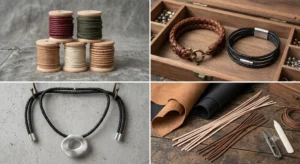
 

Hands holding thin 1mm 2mm and 2.5mm craft strands side by side
Fine diameter cords are ideal for delicate jewelry and detailed work.


┌───────────────────────┬─────────────────────────────────┬────────────────────────────────────┐
│ Profile Type          │ Ideal Project Applications      │ Best Hardware Attachments          │
├───────────────────────┼─────────────────────────────────┼────────────────────────────────────┤
│ Flat Leather Cord     │ Wide cuffs, watch bands, wrap   │ Fold-over crimp ends, wide slide   │
│                       │ bracelets, bookbinding accents   │ buckles, flat slide-on beads       │
├───────────────────────┼─────────────────────────────────┼────────────────────────────────────┤
│ Fine Round Braids     │ Delicate pendant necklaces,     │ Mini barrel clasps, crimp beads,   │
│ (1.5mm - 3mm)         │ multi-strand woven bracelets    │ wire-wrapped loop ends             │
├───────────────────────┼─────────────────────────────────┼────────────────────────────────────┤
│ Mid Round Braids      │ Classic neck cords, statement   │ Push-and-twist bayonet clasps,     │
│ (4mm - 5mm)           │ unisex wristwear, lanyards      │ magnetic locking end caps          │
├───────────────────────┼─────────────────────────────────┼────────────────────────────────────┤
│ Heavy Round Braids    │ Keychains, bag handles, pet     │ Heavy-duty swivel snap hooks,      │
│ (6mm and above)       │ leashes, heavy outdoor gear     │ oversized screw-in shackle clasps  │
└───────────────────────┴─────────────────────────────────┴────────────────────────────────────┘

Finding the Right Size for Your Creation

Width matters tremendously when choosing high-grade Leather Cords in UK supply channels. Selecting the wrong diameter often means your beads won’t fit, or your necklace ends up feeling awkwardly thick or flimsy.
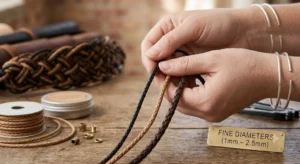
Comparison of medium 3mm 4mm and 5mm leather cords in UK sizes
Mid-size cords are the sweet spot for daily wear pendant necklaces.

Fine Diameters (1mm – 2.5mm)

Micro cords are subtle and refined. They work brilliantly for delicate multi-wrap bracelets, detailed macramé leather weaving, or stringing gemstone beads with smaller drill holes. While delicate in appearance, high-quality real leather micro braids retain impressive strength.
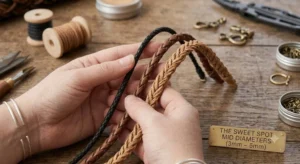
Coils of genuine vegetable tanned material with small glass storage jars
Genuine hides soften over time, developing a unique natural patina.

The Sweet Spot: Mid Diameters (3mm – 5mm)

If you are planning to assemble a Leather Cord for Necklace project, the 3mm to 4mm range is almost always the universal sweet spot. Cords in this range are substantial enough to carry heavy silver pendants, brass medals, or natural crystal stones without looking disproportionate, yet slim enough to feel lightweight around the wearer’s neck.

Statement Territory: Leather Cord 6mm and Beyond

When you move up to a Leather Cord 6mm or higher, you enter bold, tactile territory. A Leather Cord 6mm width is ideal for making heavy men’s wristbands, thick lanyard cords, sturdy drawstrings for waxed canvas rucksacks, or custom leather pet leads. Working with 6mm cord requires sturdy hardware, so always double-check the inner millimeter diameter of your end caps before purchase!

Material Authenticity: Spotting the Real Deal

When searching through local craft stores or buying online, navigating product descriptions can get confusing. Understanding leather terminology ensures you don’t waste money on materials that fall apart after a month of wear.
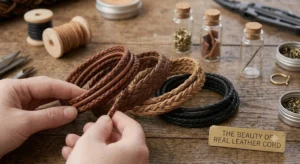
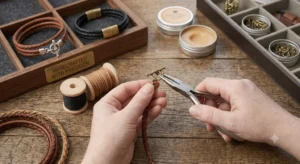
Craftsman using metal pliers to attach vintage toggle clasp to jewelry
Attaching custom metal findings and clasps to braided cords.

The Beauty of Real Leather Cords in UK

If you want an accessory that ages gracefully over time, insisting on a Real Leather Cord is essential. Real full-grain or top-grain vegetable-tanned leather contains natural fibers that absorb body oils and environmental exposure as you wear it. Over time, a Real Leather Cord softens, darkens slightly, and develops a lustrous natural patina that gives it genuine personality.

The Retail Reality Check: What About Big-Box Brands?

Crafters often search globally for inspiration or supplies, stumbling across listings like Leather Cord walmart or Leather Cord Michaels during their research. While these massive retail platforms cater well to quick weekend school crafts or budget costume builds, much of what is sold under generic craft tags can be synthetic.

Terms like “PU leather,” “bonded leather,” “leatherette,” or “microfiber leather” indicate that the product is made from shredded scrap fibers bound with synthetic plastics or coated with polyurethane. Synthetic options lack tensile memory, tend to peel or crack when exposed to water or sweat, and lack the organic feel of genuine hide. If durability and professional craftsmanship are your goals, stick to full-grain genuine hides sourced from reputable leather crafting specialists.

Color Selection and Styling Strategies

The color of your leather sets the foundation for your design aesthetic. While rich chestnuts, cognac tans, and vintage saddle browns offer rustic, earth-toned charm, one color option stands undisputed in versatility.

Why Leather Cord Black is an Essential Workshop Staple

If you were to stock only one spool of material in your studio, a high-quality Leather Cord Black should always be your first pick.

A sleek Leather Cord Black braid creates high visual contrast against bright metal findings—whether you are working with oxidized sterling silver, polished stainless steel, warm copper, or raw brushed brass. It fits seamlessly into modern minimalist design, dark gothic styling, rugged nautical fashion, and high-end urban streetwear. Furthermore, black dyed leather hides wear, dirt, and oil exceptionally well, keeping pieces looking box-fresh even after months of daily use.
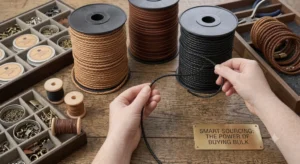
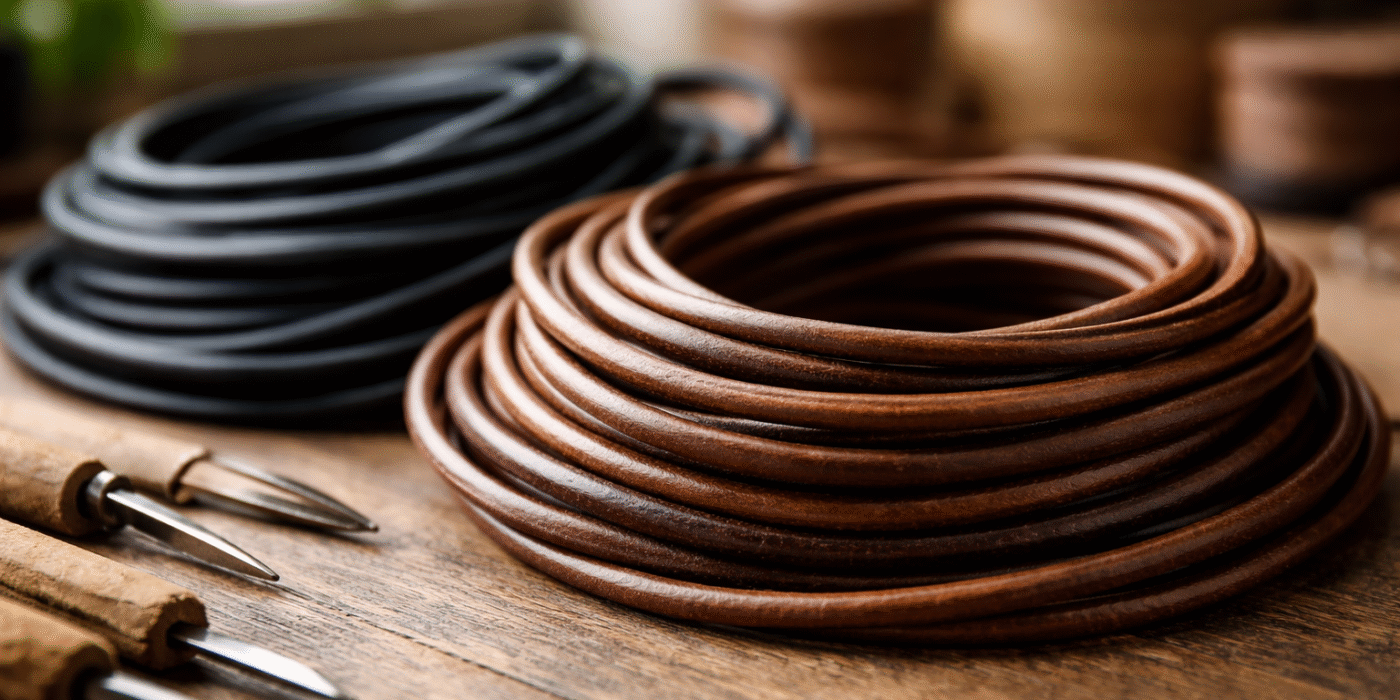
Large spools of black and brown braided leather cord bulk stock
Buying spools in bulk lowers cost per metre and ensures color consistency.

Smart Sourcing: The Power of Buying Bulk

When starting out, most crafters buy short 1-metre pre-cut packs. However, if you plan to craft regularly, sell your creations at UK artisan fairs, or open an online store on platforms like Etsy, buying small retail cuts will quickly eat into your profit margins.

Why Sourcing Leather Cord in UK  Pays Off

Upgrading to a Leather Cord bulk reel—typically sold in continuous spools ranging from 10 metres to 50 metres—offers major advantages:

  1. Massive Cost Savings: Buying in bulk reduces your per-metre cost drastically (often by 40% to 60% compared to short retail cuts).

  2. Color and Dye-Lot Consistency: Leather dyeing is an organic process. Dye lots can vary slightly in tone from batch to batch. Buying a continuous bulk spool ensures that every piece you craft for a specific collection matches identically in tone and surface sheen.

  3. Zero Material Waste: Pre-cut 1-metre strips frequently leave you with useless 20cm scrap ends after cutting a 45cm necklace. Working from a continuous bulk reel allows you to measure and cut exact lengths with zero wasted material.

Step-by-Step DIY Tutorial: Building a Heavy-Duty Pendant Necklace

Ready to put your materials to work? Here is a simple, foolproof guide to crafting a professional-grade unisex pendant necklace using a 4mm round braided leather cord and glue-in metal end hardware.

Tools and Materials Required:

  • 4mm round braided real leather cord (approx. 50cm)

  • 1 x Metal pendant with a bail loop larger than 4.5mm

  • 2 x 4mm glue-in end caps with jump rings

  • 1 x Lobster claw clasp & closing jump ring

  • Professional jewelry adhesive (such as E6000, 2-part epoxy, or flexible instant cyan-acrylate)

  • Sharp rotary leather cutter or heavy shears

  • Measuring tape

1.Measure and Cut Cleanly: Time required: 2 minutes.

Unspool your leather cord in UK and measure out your desired length using a flexible measuring tape. Standard necklace lengths run around 45cm (choker fit), 50cm (standard collarbone drop), or 60cm (low chest drop). Using a very sharp rotary cutter or shears, cut straight across the cord in one firm motion to keep the braid ends clean and unfrayed.

2.Dry-Fit the Core and Caps: Time required: 3 minutes.

Inspect the cut tips of your cord. If the internal core fibers protrude slightly past the outer braided weave, trim them back flush. When working with quality Leather Cords in UK craft setups, test-fit the leather tip inside your metal end cap without glue to ensure it slides in smoothly without bunching up or catching.

3.Thread Your Chosen Pendant: Time required: 1 minute.

Critical Step: Before applying any adhesive to your second end cap, slide your pendant’s bail onto the cord! When crafting custom jewelry using Leather Cords in UK projects, ensuring the pendant is pre-threaded prevents you from having to disassemble your finished hardware later.

4.Glue and Set the Hardware: Time required: 10 minutes cure time.

Apply 2 to 3 small drops of flexible jewelry glue inside the recessed socket of your end cap. Do not overfill, as glue will spill over onto the visible material. Insert the cut tip of your Leather Cords in UK project into the cap while giving it a slight half-turn twist to distribute the glue evenly across the internal walls. Wipe away any excess instantly with a dry cloth. Hold firmly for 30 seconds, then attach your clasp hardware via jump rings once fully cured.


Finished pendant jewelry resting on rustic oak workbench tools
A completed custom braided leather pendant necklace ready to wear.

Essential Care and Maintenance for Braided Leather

Unlike metal chains or synthetic cordage, natural leather is an organic material that absorbs moisture, oils, and environmental factors. To keep your handcrafted braided leather creations looking rich and supple for years to come, share these crucial care tips with your customers or follow them for your personal collection:

Keep Away from Water

Water is the ultimate enemy of dyed natural hides. Never wear your Leather Cords in UK jewelry pieces while swimming, taking a shower, or visiting a sauna. When leather gets saturated with water, the moisture strips away the natural tanning oils inside the hide. As the leather dries out afterward, the fibers contract, making the braid stiff, brittle, and susceptible to cracking along the weave joints.

Apply Conditioner Periodically

Just like a fine pair of leather boots, a braided cord benefits from occasional conditioning. Every few months, place a tiny pea-sized drop of natural beeswax conditioner, neutral leather balm, or mink oil onto a soft microfiber cloth. Gently buff the cloth along the braided weave. This restores moisture, maintains flex, deepens the dye color, and adds a micro-layer of water resistance against sweat.

Store Away from Direct UV Sunlight

Never leave your leather cords or finished jewelry sitting on a sunny windowsill or near direct heat sources like radiators. Prolonged UV exposure breaks down leather dyes rapidly, turning deep blacks into dull grays and fading rich brown hues into washed-out tans. Store your pieces in a cool, dry cloth pouch or a lined jewelry box when not in use.
Leather Cords in USA – Buy High-Quality Leather Straps

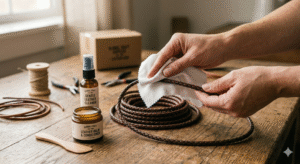
leather conditioner with a cloth to a braided leather cord on a wooden table, with leather care products and tools in the background.
leather cords—cleaning and conditioning to maintain durability, shine, and long-lasting performance.

If you’re someone who loves crafting, jewelry making, or working with premium materials, then you’ve probably come across Leather Cords in USA. These cords are not just simple strips of leather — they’re a key material used in fashion, DIY projects, accessories, and even industrial applications.

In this blog, we’ll break things down in a simple and practical way so you can understand everything about Leather Cords in USA, including types, uses, buying tips, and even some important trade-related codes like HS codes.


What Are Leather Cords?

Let’s keep it simple.

Leather cords are thin strips or rounded pieces of leather that are used for making jewelry, belts, handbags, and decorative items. They come in different shapes like:

  • Round cords
  • Flat cords
  • Braided cords

In the Leather Cords in USA market, you’ll find a huge variety of options — from genuine leather to synthetic alternatives.


Why Leather Cords Are Popular in USA

There’s a reason why Leather Cords in USA are in high demand:

  •  Durable and long-lasting
  •  Premium look and feel
  •  Flexible for multiple uses
  •  Eco-friendly (if genuine leather)

People in the USA love handmade and DIY products, and leather cords fit perfectly into that trend.


Types of Leather Cords in USA

When you explore Leather Cords in USA, you’ll notice different types available:

1. Round Leather Cords

These are the most commonly used cords for necklaces and bracelets.

2. Flat Leather Cords

Perfect for belts, straps, and modern jewelry designs.

3. Braided Leather Cords

Stylish and strong — often used in premium accessories.

Each type of Leather Cords serves a different purpose, so choosing the right one matters.


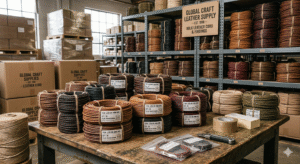
leather cords in various colors and sizes arranged on a wooden table in a warehouse, with labeled packaging, shelves, and boxes in the background.
leather cords organized for wholesale—featuring a wide range of colors, sizes, and styles ready for crafting, manufacturing, and business supply.

Common Uses of Leather Cords

Let’s look at where Leather Cords  are actually used:

  • Jewelry making (necklaces, bracelets)
  • Shoe laces (related to Shoes HS code category in trade)
  • Bags and accessories (linked with Ladies Handbags HS Code)
  • Wallet designs (connected to Leather WALLET HS Code and HS Code for wallet)
  • Belts (related to Leather belt HS code)

So basically, leather cords are everywhere — from fashion to utility.


Understanding HS Code for Leather Products

If you are planning to import/export Leather Cords in USA, then understanding HS codes is super important.

What is HS Code?

HS Code (Harmonized System Code) is used internationally to classify products.

For leather-related products, here are some common LSI keywords:

  • HS Code for leather – General category for leather materials
  • Leather WALLET HS Code – Used for leather wallets
  • Ladies Handbags HS Code – For leather handbags
  • Leather belt HS code – For belts
  • HS Code for wallet – Another classification for wallets
  • Shoes HS code – For footwear using leather

Even though Leather Cords in USA may fall under broader leather categories, knowing these codes helps in smooth trade.


Quality Factors to Check Before Buying

Not all Leather Cords in USA are the same. Here’s what you should check:

1. Material Type

  • Genuine leather (best quality)
  • Synthetic leather (cheaper option)

2. Thickness & Size

Choose based on your project — jewelry needs thinner cords, while belts need thicker ones.

3. Finish

Some cords are polished, while others have a natural grain look.

4. Flexibility

Good Leather Cords should be flexible but not weak.


Where to Buy Leather Cords in USA

You can easily find Leather Cords in USA from:

  • Online marketplaces
  • Wholesale suppliers
  • Craft stores
  • Leather specialty shops

Brands like McKinley leather are also known for quality leather products, making them a good reference when looking for premium materials.


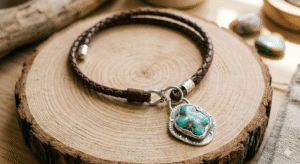
 leather cord bracelet with a silver clasp and turquoise stone pendant placed on a wooden slice, with natural decorative elements in the background.
Handcrafted leather cord bracelet featuring a rustic braided design and a striking turquoise pendant—artisanal style.

Leather Cords for Jewelry Making

If you’re into DIY or jewelry design, then Leather Cords in USA are a must-have.

Why?

  • They give a natural and premium look
  • Easy to cut and customize
  • Work well with pendants and beads

You can create:

  • Necklaces
  • Bracelets
  • Anklets

And the best part? They never go out of style.


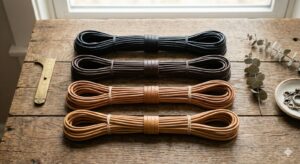
Neatly arranged bundles of leather cords in black, dark brown, tan, and light brown colors placed on a rustic wooden table with measuring tools and accessories nearby.
leather cords in multiple shades and finishes—perfect for crafting, jewelry making, and DIY projects with a clean, organized presentation.

Leather Cords in Fashion Industry

The fashion industry heavily relies on Leather Cords.

From luxury brands to local designers, leather cords are used in:

  • Handbags (linked with Ladies Handbags HS Code)
  • Belts (under Leather belt HS code)
  • Wallets (covered by Leather WALLET HS Code)

This makes leather cords a key material in fashion manufacturing.


Cleaning & Maintenance Tips

To keep your Leather Cords in good condition, follow these tips:

  • Avoid water exposure
  • Store in a dry place
  • Use proper leather cleaners

You might come across something called Cleaning code S, which generally refers to solvent-based cleaning methods. This is important if your leather product requires special care.


Wholesale Leather Cords in USA

If you’re running a business, buying Leather Cords  in bulk is a smart move.

Benefits of Wholesale Buying:

  • Lower cost
  • Consistent quality
  • Better supplier relationships

Many suppliers also provide custom sizes and colors.


Pricing of Leather Cords in USA

The price of Leather Cords  depends on:

  • Material (genuine vs synthetic)
  • Thickness
  • Length
  • Finish

On average:

  • Basic cords → affordable
  • Premium cords → higher price

Trends in Leather Cords Market

The Leather Cords  market is evolving with new trends:

  • Eco-friendly leather
  • Vegan leather alternatives
  • Custom dyed cords
  • Minimalist jewelry designs

People now prefer simple yet stylish products, which increases demand for leather cords.

Round Leather Cord for Jewelry Making in Germany: Sizes, Prices & Where to Buy

Round Leather Cord for Jewelry Making in Germany: Sizes, Prices & Where to Buy

If you’re into DIY jewellery — simple bracelets, rustic chokers, or hand-stamped pendants — nothing beats the tactile, natural vibe of real leather. In this guide I’ll walk you through everything you need to know about round leather cord for jewelry making Germany: what sizes pass for what projects, how much you’ll pay, and the best places to pick it up without breaking the bank.

First off: why pick round leather cord? It’s strong, knots nicely, and gives a clean, classic finish that flat leather or cotton just can’t match. Whether you’re threading beads, using crimps, or making adjustable sliding knots, round leather gives a polished look with a handmade soul.

Common sizes (and what to use them for)

Round leather cord comes in tiny differences but those millimetres matter. Here’s a quick cheat-sheet that makers swear by:

  • 1.0 mm — delicate cords for tiny clasps, seed-bead necklaces, or thin metal closures. Great when you want something subtle.

  • 1.5 mm — the goldilocks for small pendants and beaded bracelets. Works well with small crimps.

  • 2.0 mm — the most versatile size; perfect for most necklaces and bracelets, and it pairs with standard cord ends and split rings. Several popular suppliers stock 2 mm heavily.

  • 3.0 mm —chunkier look, great for men’s bracelets, bolo-style cords, and statement pieces. Often sold in pre-cut lengths (1m, 5m, 25m).

  • 4–5 mm — for wrap bracelets or rustic chokers. These require larger findings and a bit more confidence with knots.

If you’re in doubt, grab a small sampler pack with 1.5, 2, and 3 mm to test — many shops sell sample reels or short lengths so you can check colour and flexibility before committing. Online marketplaces and craft stores commonly list exact diameters and lengths so you can match findings precisely.

Leather types and finish

Most round cords you’ll see are cowhide (buffed or smooth), suede (fuzzy on the outside), or braided leather (tighter, stronger). Natural undyed leather will age beautifully, while dyed cords come in every shade. For high-end jewellery, look for full-grain or calfskin cords; for casual or craft projects, standard cowhide rounds are fine and much cheaper.

Prices — what to expect in Germany

Pricing varies a lot depending on diameter, leather quality, length and seller. To give you a sense:

  • Single metres or short lengths (1–5 m) of basic 1.5–2 mm round leather often start around €0.45–€2.50 per metre for mass-produced cord. eBay listings and smaller sellers commonly list cords in this price range.

  • Packaged bundles (5–25 m) or branded cords on marketplaces like Amazon can range from €3–€18 depending on diameter and packaging (e.g., 10–25 m spools). Some 2 mm 100 m rolls are extremely cheap per meter — great if you make a lot.

  • Premium, specialty, or braided bolo cords (higher-grade leather) can be €15–€30 for small quantities (10 yards etc.). If you want reptile-embossed or hand-finished leather, expect higher pricing.

Tip: If you’re making for sale, buy spools or wholesale lots — price per meter drops a lot when you buy 50–100 m.

Where to buy in Germany (online + brick-and-mortar)

You’ve got options — big marketplaces, specialist bead suppliers, craft chains, and independent leather shops. Here are reliable places to check:

  • Creative- Leathers — huge selection, everything from 1 mm to 8 mm, plus fast shipping if you’re Prime. Look for spool lengths and customer photos to judge colour and thickness.

  • Etsy — excellent for artisan-quality and small-batch sellers in Europe; great for unusual colours or braided leather. You can often message sellers for custom lengths.

  • eBay Germany — good for super-cheap single metres or bulk lots from smaller sellers. Shipping varies but you can find bargains.

  • Local craft chains and hobby shops (e.g., idea / idee-shop) — real-life handling is unbeatable: feel the texture, test flexibility, and spot the exact colour under natural light. Many German craft retailers stock 1.5 mm and 2 mm leather cord from brands like Rico Design.

  • Specialist bead suppliers and leather wholesalers (online) — shops like Creative-Leathers  and other bead wholesalers sell quality leather cord in many diameters and sell wholesale prices if you need large amounts.

If you like to shop physically, look for local craft fairs, maker markets, or independent leather shops in city centres — bargaining for small volume or picking up unique colours is easier in person.

Buying tips (so you don’t regret it)

  • Always check diameter versus the size of your findings (end caps, crimps, clasps). Suppliers sometimes list “about 2 mm” — real-world measurement can vary.

  • Check the return policy and look at customer photos. Leather colours in photos sometimes look different because of studio lighting.

  • When buying dyed leather, ask about colourfastness if you expect it to contact skin or sweat.

  • Consider pre-waxed or pre-treated cords for longevity; otherwise, a light beeswax treatment can protect the leather.

  • Buy a small spool first if you’re testing a new supplier — then scale up when you like it.

Quick DIY hacks

  • For secure ends on round leather, use tube end crimps with glue or bead caps that fit the diameter. For 2 mm cords, small crimp end caps are widely available.

  • Make sliding knots on 2–3 mm cords for adjustable necklaces — they hold well and look neat.

  • For an aged look, rub a little leather balm selectively to darken areas — it ages the cord naturally.

Final thoughts

Whether you’re making simple bead necklaces or launching a jewellery line, round leather cord for jewelry making Germany is easy to source and comes in sizes for every project. Start with a 2 mm trial spool, test a few colours (natural, black, and one accent), and once you know the finish you like, go bulk to save. Happy crafting — and if you want, tell me what piece you’re planning and I’ll recommend the exact diameter, colour and end-finding to match.

Leather Cord for Jewelry Making High-Quality DIY Jewelry Supplies in France

Leather cord for jewelry has become an essential material in modern jewelry making, especially for artisans, designers, and DIY enthusiasts across France. Known for its natural elegance, durability, and versatility, leather cord allows creators to design bracelets, necklaces, anklets, and pendants that suit both contemporary and traditional styles.

In the French jewelry market, where craftsmanship and material quality are highly valued, leather cords for jewelry in France are widely used in handmade, boutique, and semi-luxury collections. This guide explains everything you need to know about leather cord for jewelry, from types and uses to buying tips and care instructions, with a strong focus on commercial and DIY relevance.

Leather cord for 
jewelry

Understanding Leather Cord for Jewelry

Leather cord for jewelry refers to natural or treated leather strips shaped into round, flat, or braided cords. These cords are designed specifically for jewelry making and are compatible with clasps, beads, charms, and metal findings.

Leather cords are preferred because they combine flexibility with strength. Unlike synthetic alternatives, leather provides a premium look and tactile feel, making it ideal for high-quality handmade jewelry.

Therefore, for designers in France who focus on artisanal value and long-lasting materials, leather cord is a practical and aesthetic choice.

Types of Leather Cords for Jewelry

Selecting the correct type of leather cord for jewelry is critical for both design and durability.

1. Round Leather Cord

Round leather cords for jewelry are widely used in minimalist and modern designs. They are ideal for:

  • Beaded necklaces

  • Charm bracelets

  • Unisex jewelry

Common diameters range from 1 mm to 4 mm, depending on the design requirement.

2. Flat Leather Cord

Flat leather cords for jewelry are popular in statement pieces and layered designs. They are frequently used in:

  • Wrap bracelets

  • Chokers

  • Cuff-style jewelry

Furthermore, flat cords provide a broader surface, making them suitable for engraving or decorative stitching.

3. Braided Leather Cord

Braided leather cords for jewelry offer texture and visual depth. These cords are often used in premium or bohemian-style jewelry and appeal strongly to the French handmade jewelry market.

4. Genuine vs. Synthetic Leather Cord

Genuine leather cords for jewelry are durable, breathable, and develop a natural patina over time. Synthetic alternatives may cost less but lack the authenticity and longevity preferred in high-quality jewelry making.

Why Leather Cords for Jewelry Are Popular in France

France has a strong culture of craftsmanship, fashion, and handmade goods. Leather cord for jewelry aligns perfectly with these values.

Key reasons for popularity include:

  • Natural and eco-conscious appeal

  • Compatibility with gold, silver, and stainless steel findings

  • Suitability for both luxury and DIY jewelry

  • Timeless aesthetic that matches French fashion trends

Whether used by independent artisans in Paris or DIY creators in regional markets, leather cords for Jewelry support creativity without compromising quality.

Commercial and DIY Uses of Leather Cord for Jewelry

Leather cord for jewelry is highly versatile and fits both commercial production and DIY projects.

Commercial Jewelry Applications

  • Handmade designer collections

  • Boutique jewelry brands

  • Custom men’s and women’s accessories

  • Spiritual and symbolic jewelry

In commercial settings, consistent thickness and finish of leather cords for jewelry are essential for branding and customer satisfaction.

DIY Jewelry Making

For DIY creators, leather cord for jewelry is easy to work with and beginner-friendly. It can be cut, knotted, glued, or crimped without specialized tools.

Popular DIY projects include:

  • Adjustable bracelets

  • Pendant necklaces

  • Multi-layer chokers

  • Personalized gift jewelry

Therefore, leather cords for jewelry are ideal for hobbyists and small-scale sellers alike.

How to Choose the Right Leather Cord for Jewelry

When selecting leather cord for jewelry, several factors should be considered:

  • Thickness: Match cord diameter to beads and clasps

  • Finish: Matte, polished, or waxed leather

  • Flexibility: Softer cords are better for knots and wraps

  • Color stability: High-quality leather cords for jewelry resist fading

Furthermore, sourcing leather cord from reliable suppliers ensures consistency, which is especially important for commercial jewelry production in France.

Care and Maintenance of Leather Cord Jewelry

Proper care extends the life of jewelry made with leather cords.

Recommended care practices:

  • Avoid prolonged exposure to water

  • Store in a dry, cool place

  • Clean gently with a soft, dry cloth

  • Do not use harsh chemicals

Whether the jewelry is handmade for personal use or sold commercially, maintaining leather cord quality preserves its appearance and strength.

Sustainability and Ethical Considerations

In the French market, sustainability plays a growing role in purchasing decisions. Many buyers prefer leather cords for jewelry sourced from ethical tanneries or made from by-products of the food industry.

Therefore, choosing responsibly sourced leather cord for jewelry can enhance brand trust and align with eco-conscious values.

Trends in Leather Cord Jewelry Making

Current jewelry trends in France highlight:

  • Minimalist leather cord necklaces

  • Mixed-material designs combining leather and metal

  • Earth-tone and natural color palettes

  • Unisex leather cord jewelry

Leather cords for jewelry remain relevant because they adapt easily to changing fashion preferences.

In Conclusion

Leather cord for jewelry is a fundamental material for both professional jewelry makers and DIY enthusiasts in France. Its natural elegance, durability, and versatility make it suitable for a wide range of designs, from minimalist accessories to premium handcrafted collections.

Therefore, whether you are creating jewelry for commercial sale or personal projects, selecting high-quality leather cords for jewelry ensures lasting value, aesthetic appeal, and customer satisfaction. Wrapping up, leather cord continues to be a trusted and relevant choice in the evolving world of jewelry making.

X
Add to cart