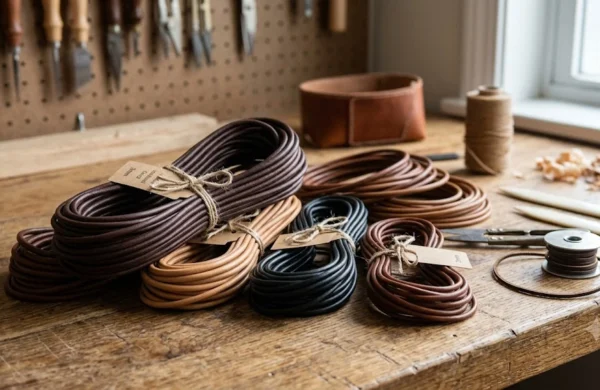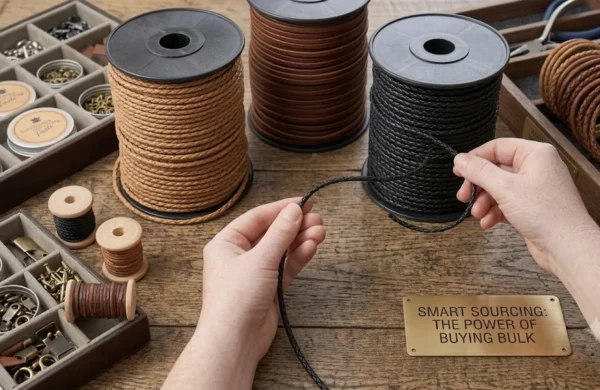
Leather cords are one of those materials that look simple — but choosing the right one can completely change the final result of your jewelry, craft, or fashion product. In 2026, the European market has become even more competitive: more suppliers, more quality levels, and yes… more confusing product descriptions.
If you’re planning to buy leather cords for jewelry making, handmade crafts, shoelaces, bracelets, necklaces, keychains, or premium handmade accessories, this guide will help you choose the best leather cords in Europe without wasting money or ending up with low-grade cords.
Related Blogs
How to Choose the Right Leather Cord for Jewelry Making in Europe
Leather Cord for Jewelry Making High-Quality DIY Jewelry Supplies in France
Why Leather Cords Are Still Trending in 2026
In Europe, the demand for leather cord products is growing because:
People prefer handmade and custom accessories
Minimalist jewelry trend continues
Eco-friendly and sustainable materials are popular
Leather looks premium compared to cotton or synthetic cords
Leather cords work well for both men’s and women’s jewelry
And in 2026, many small creators and Etsy-style businesses are actively sourcing the best leather cords in Europe to keep quality high.
Step 1: Understand the Type of Leather Cord You Need
Before comparing suppliers or prices, first decide what you actually need.
Here are the most common types found in Europe:
(-) Round Leather Cord
Best for bracelets, necklaces, bolo ties
Smooth look
Strong and easy to knot
(-) Flat Leather Cord
Best for trendy wrap bracelets & choker designs
Looks wider and more premium
Great for weaving styles
(-) Braided Leather Cord
Best for luxury designs
Stronger texture and more visual depth
Slightly expensive, but worth it
If your product is premium jewelry, braided or smooth round cords often fit best. That’s why many European makers call them the best leather cords in Europe for high-end output.
Step 2: Check Leather Quality (This Matters the Most)
Not all leather is real leather, and in Europe you’ll see many products marketed as “leather” but blended with fillers.
Best leather choices to look for:
✅ Full-Grain Leather Cord
Top quality
Long-lasting
Natural texture
Costs more, but premium
✅ Top-Grain Leather Cord
Slightly processed
Still very good quality
More uniform finish
⚠️ Genuine Leather Cord
This term sounds high quality, but it usually means:
lower-grade layer leather
more processed
less durability
❌ Bonded Leather Cord
Avoid.
It’s made from leather dust + glue.
If you want the best leather cords in Europe, go for full-grain or top-grain leather only.
Step 3: Choose the Right Thickness (Most People Fail Here)
Thickness decides durability and how your final product looks.
Here’s a safe guide:
(-) 1mm – 1.5mm
best for delicate jewelry
threading beads & pendants
light bracelets
(-) 2mm
most popular for bracelets and necklaces
good balance between strength + style
(-) 3mm – 4mm
best for men’s jewelry
keychains, rugged accessories, dog tags
(-) 5mm+
heavy craft use
leather straps and fashion accessories
In Europe, 2mm and 3mm are the best selling sizes, especially for jewelry brands. Many top suppliers promote these as the best leather cords in Europe for beginners and professionals.
Step 4: Decide If You Need Natural or Dyed Leather Cord
Natural Leather Cord
Pros:
organic color tone
looks premium
ages beautifully
Cons:
stains easily
color can darken over time
Dyed Leather Cord
Pros:
stable color
many shades
modern looks
Cons:
cheap dyes can bleed (big issue!)
If you sell in Europe, color bleeding can increase refunds. That’s why top brands always buy color-fast dyed leather cords, often the best leather cords in Europe.
Step 5: Check Finishing & Coating Quality
Finishing is what makes one supplier look “premium” and another look like cheap warehouse stock.
Look for:
Smooth surface finish
No cracks or hard edges
No sticky coating
No weird chemical smell
In 2026, buyers are more sensitive about smell because “fake leather smell” is often linked to cheap processing.
If you want the best leather cords in Europe, the finish should feel soft and flexible — not plastic-like.
Step 6: Strength Test (Even Before Buying Bulk)
If you’re ordering samples, test it like a pro:
(-) Pull Test
Pull the cord firmly.
✅ Should not stretch too much
✅ Should not crack
(-) Bend Test
Fold it.
✅ No white cracks
(-) Water Drop Test
Drop little water and rub.
✅ No color bleeding
These 3 tests instantly show whether you’re getting the best leather cords in Europe or just “cheap dyed strips.”
Step 7: Understand European Leather Standards (Important in 2026)
In Europe, there’s increasing focus on:
eco-friendly tanning
low chemical usage
safer dyes
sustainable sourcing
Vegetable-tanned leather cords
These are considered premium because:
less chemical tanning
natural and skin-friendly
ages better
Many premium sellers advertise vegetable-tanned cords as the best leather cords in Europe because they match sustainability expectations.
Step 8: Choose the Best Cord Based on Your Use Case
Let’s make it simple.
For jewelry makers
✅ Round 2mm
✅ Flat 3mm
✅ soft finish, minimal coating
This is considered the best leather cords in Europe for jewelry production.
For fashion accessories
✅ flat 5mm
✅ braided thick cords
✅ strong + stylish
For DIY crafts / home projects
✅ 3mm–4mm cords
✅ bulk rolls for affordability
Step 9: Price Check (Avoid Getting Scammed)
In 2026 Europe market, average pricing is like this:
Low quality synthetic “leather” cord: cheap
Genuine leather cords: medium
Full grain vegetable tanned cords: premium
If a supplier claims “full grain leather” at extremely low price, be careful.
A trusted seller of the best leather cords in Europe will always provide:
leather type info
thickness details
finish details
sample option
Step 10: How to Select the Best Supplier in Europe
You can’t choose the best leather cords in Europe if the supplier is unreliable.
Here are green flags:
(-) Clear product specs
diameter
tanning type
leather grade
origin
(-) Sample policy
They allow small sample packs.
(-) Consistent stock
They can supply monthly without quality difference.
(-) Customer support
Fast replies and replacement policy.
And most importantly, they should share real product images (not generic ones).
Common Mistakes to Avoid While Buying Leather Cords
Here are mistakes that waste money:
Buying without sample
Buying only on price
Not checking dye bleeding
Not choosing correct thickness
Ignoring tanning type
Trusting “genuine leather” blindly
Even if the listing says best leather cords in Europe, always check specs.
Best Tips to Store Leather Cords (So They Don’t Get Ruined)
Even premium cords can get damaged if stored wrong.
Store correctly:
keep in dry place
avoid direct sunlight
avoid humidity
don’t press heavy objects on rolls
Good storage keeps the best leather cords in Europe in fresh condition for long time.
Quick Buying Checklist (Simple)
Before buying, check:
✅ Leather type: full grain / top grain
✅ Tanning: veg tanned preferred
✅ Thickness: 2mm–3mm for jewelry
✅ Finish: smooth, flexible
✅ Dye: color-fast
✅ Sample available
✅ Supplier rating and reviews
✅ Return policy
This checklist will help you pick the best leather cords in Europe confidently.
Final Thoughts
In 2026, the European leather cord market is full of options — but quality still depends on leather grade, tanning type, thickness, and supplier trust.
If you’re serious about creating premium jewelry or handmade accessories, don’t compromise. Always buy samples, run quick tests, and invest in reliable suppliers.
Once you get the right stock, your products will look premium and customers will feel the quality immediately.
That’s the real secret behind choosing the best leather cords in Europe.