
Braided Leather Cord UK
The Ultimate Guide to Braided Leather Cord in the UK: Crafting, Sourcing, and Style Trends
Whether you are crafting a rugged men’s wristband, stringing together a bohemian pendant, or pulling together custom handles for a handcrafted tote bag, finding high-quality Leather Cords in UK craft markets is essential for any maker project. There is something deeply satisfying about working with natural, textured materials—it brings a weight, warmth, tactile character, and flexibility that synthetic cords, nylon threads, or cheap plastic imitations simply cannot match.
If you have ever spent an afternoon browsing online craft supply stores or wandering through local UK artisan markets looking for quality Leather Cords in UK for your next big build or jewelry repair, you have probably realized that not all leather is created equal. From wide flat profiles to chunky multi-strand round weaves, getting the right material and thickness can make or break your entire design.
In this comprehensive guide, we are going to dive deep into everything you need to know about working with, choosing, styling, and preserving braided leather. We will also look at how to source top-tier material in the UK without hitting a quality wall or wasting your budget.
What Makes Braided Leather Cord So Special?
Before we look at sizes and crafting techniques, it is worth asking: why choose braided leather over smooth single-strand leather strips or plain round cords?
While a single smooth strand of leather looks clean, structured, and minimal, braided leather introduces a totally different dynamic and aesthetic energy to any project.
1. Superior Flexibility and Natural Drape
leather cord in UK Single-strand thick leather can feel remarkably stiff, especially at higher diameters like 4mm or 6mm. It takes weeks—sometimes months—of continuous wear to break in a solid strip of thick leather. Braids, on the other hand, are inherently supple. By weaving multiple thin, pliable strips of hide around a core, the cord gains immediate flexibility. It drapes naturally around the curves of a neck or wrist from day one without biting into the skin or feeling rigid.
2. Rich Dimensional Texture
The interlocked pattern of a woven braid catches light and shadow in a unique way. As you turn a braided piece under natural sunlight, the weave reflects subtly different tones depending on how individual strands were cut and dyed. This creates a visual depth and vintage appeal that plain flat leather simply cannot emulate.
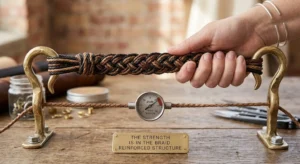
3. Structural Tensile Strength
Multi-strand weaves distribute tension and physical strain across several interwoven strips rather than relying on a single structural line. In everyday practical terms, this means that even if one outer strand suffers minor surface wear or abrasion over years of heavy use, the overall integrity of your necklace, lanyard, or bracelet remains rock solid.
Understanding Profiles: Flat Leather Cord vs. Round Braids
When planning a build, matching the physical profile of your leather cord to your hardware and intended wear style is crucial. Let’s look at the two dominant profile categories used by leather cord in UK creators.
Flat Leather Cord: The Classic Cuff and Strap Choice
A Flat Leather Cord is designed with a wide, low-profile footprint that rests comfortably flat against the skin. Because of its structural shape, it does not twist or roll easily when worn around the wrist or waist.
Best Applications: Wide wrap bracelets, rustic watch straps, bookbinding ties, bag trim, and belt accents.
Key Advantage: Distributes weight evenly across a broader surface area, making it very comfortable for heavier wristwear or utility items.
Hardware Pairings: Fold-over crimps, wide magnetic clasps, belt-style buckles, and flat slide charms.
Round Braided Cords: The Versatile Jewelry All-Rounder
Round braided cords are constructed using 3-strand, 4-strand, or 8-strand weaving techniques, often folded tightly around a soft central leather or textile core. This construction creates a symmetrical, cylindrical cord that maintains its shape beautifully.
Best Applications: Necklaces, pendant cords, beaded slider bracelets, keychains, and decorative drawstrings.
Key Advantage: Symmetrical profile allows beads, bails, and charms to slide smoothly around the cord without catching edge corners.
Hardware Pairings: Round glue-in bayonet clasps, magnetic barrel clasps, folded cord caps, and lobster claws with jump rings.
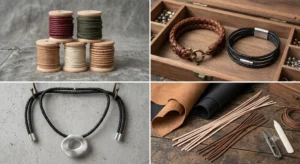
┌───────────────────────┬─────────────────────────────────┬────────────────────────────────────┐
│ Profile Type          │ Ideal Project Applications      │ Best Hardware Attachments          │
├───────────────────────┼─────────────────────────────────┼────────────────────────────────────┤
│ Flat Leather Cord     │ Wide cuffs, watch bands, wrap   │ Fold-over crimp ends, wide slide   │
│                       │ bracelets, bookbinding accents   │ buckles, flat slide-on beads       │
├───────────────────────┼─────────────────────────────────┼────────────────────────────────────┤
│ Fine Round Braids     │ Delicate pendant necklaces,     │ Mini barrel clasps, crimp beads,   │
│ (1.5mm - 3mm)         │ multi-strand woven bracelets    │ wire-wrapped loop ends             │
├───────────────────────┼─────────────────────────────────┼────────────────────────────────────┤
│ Mid Round Braids      │ Classic neck cords, statement   │ Push-and-twist bayonet clasps,     │
│ (4mm - 5mm)           │ unisex wristwear, lanyards      │ magnetic locking end caps          │
├───────────────────────┼─────────────────────────────────┼────────────────────────────────────┤
│ Heavy Round Braids    │ Keychains, bag handles, pet     │ Heavy-duty swivel snap hooks,      │
│ (6mm and above)       │ leashes, heavy outdoor gear     │ oversized screw-in shackle clasps  │
└───────────────────────┴─────────────────────────────────┴────────────────────────────────────┘
Finding the Right Size for Your Creation
Width matters tremendously when choosing high-grade Leather Cords in UK supply channels. Selecting the wrong diameter often means your beads won’t fit, or your necklace ends up feeling awkwardly thick or flimsy.
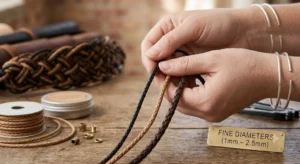
Fine Diameters (1mm – 2.5mm)
Micro cords are subtle and refined. They work brilliantly for delicate multi-wrap bracelets, detailed macramé leather weaving, or stringing gemstone beads with smaller drill holes. While delicate in appearance, high-quality real leather micro braids retain impressive strength.
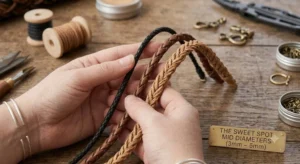
The Sweet Spot: Mid Diameters (3mm – 5mm)
If you are planning to assemble a Leather Cord for Necklace project, the 3mm to 4mm range is almost always the universal sweet spot. Cords in this range are substantial enough to carry heavy silver pendants, brass medals, or natural crystal stones without looking disproportionate, yet slim enough to feel lightweight around the wearer’s neck.
Statement Territory: Leather Cord 6mm and Beyond
When you move up to a Leather Cord 6mm or higher, you enter bold, tactile territory. A Leather Cord 6mm width is ideal for making heavy men’s wristbands, thick lanyard cords, sturdy drawstrings for waxed canvas rucksacks, or custom leather pet leads. Working with 6mm cord requires sturdy hardware, so always double-check the inner millimeter diameter of your end caps before purchase!
Material Authenticity: Spotting the Real Deal
When searching through local craft stores or buying online, navigating product descriptions can get confusing. Understanding leather terminology ensures you don’t waste money on materials that fall apart after a month of wear.
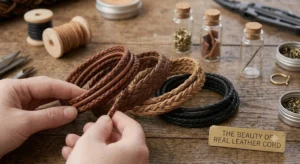
The Beauty of Real Leather Cords in UK
If you want an accessory that ages gracefully over time, insisting on a Real Leather Cord is essential. Real full-grain or top-grain vegetable-tanned leather contains natural fibers that absorb body oils and environmental exposure as you wear it. Over time, a Real Leather Cord softens, darkens slightly, and develops a lustrous natural patina that gives it genuine personality.
The Retail Reality Check: What About Big-Box Brands?
Crafters often search globally for inspiration or supplies, stumbling across listings like Leather Cord walmart or Leather Cord Michaels during their research. While these massive retail platforms cater well to quick weekend school crafts or budget costume builds, much of what is sold under generic craft tags can be synthetic.
Terms like “PU leather,” “bonded leather,” “leatherette,” or “microfiber leather” indicate that the product is made from shredded scrap fibers bound with synthetic plastics or coated with polyurethane. Synthetic options lack tensile memory, tend to peel or crack when exposed to water or sweat, and lack the organic feel of genuine hide. If durability and professional craftsmanship are your goals, stick to full-grain genuine hides sourced from reputable leather crafting specialists.
Color Selection and Styling Strategies
The color of your leather sets the foundation for your design aesthetic. While rich chestnuts, cognac tans, and vintage saddle browns offer rustic, earth-toned charm, one color option stands undisputed in versatility.
Why Leather Cord Black is an Essential Workshop Staple
If you were to stock only one spool of material in your studio, a high-quality Leather Cord Black should always be your first pick.
A sleek Leather Cord Black braid creates high visual contrast against bright metal findings—whether you are working with oxidized sterling silver, polished stainless steel, warm copper, or raw brushed brass. It fits seamlessly into modern minimalist design, dark gothic styling, rugged nautical fashion, and high-end urban streetwear. Furthermore, black dyed leather hides wear, dirt, and oil exceptionally well, keeping pieces looking box-fresh even after months of daily use.
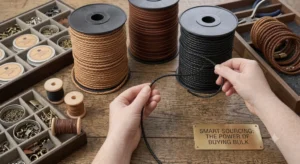
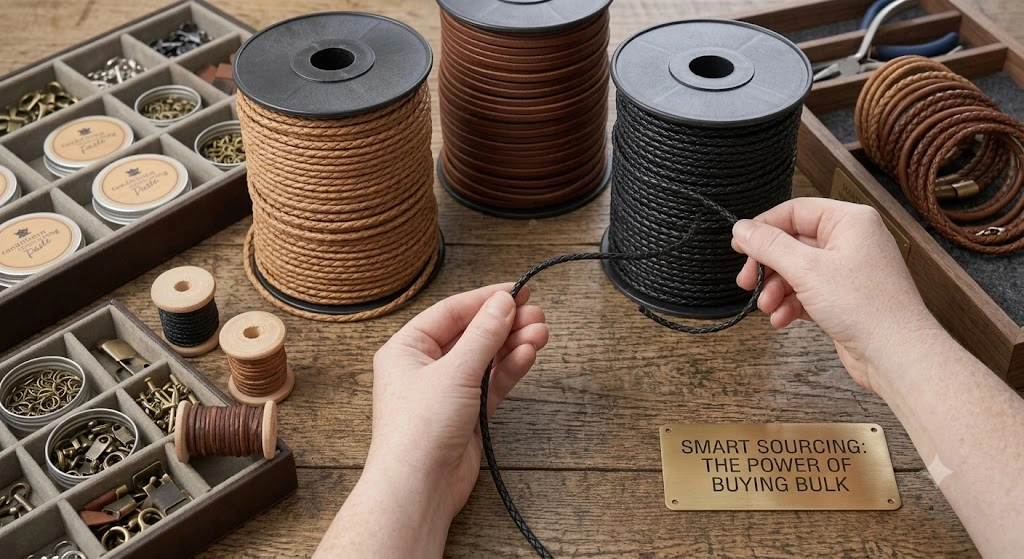
Smart Sourcing: The Power of Buying Bulk
When starting out, most crafters buy short 1-metre pre-cut packs. However, if you plan to craft regularly, sell your creations at UK artisan fairs, or open an online store on platforms like Etsy, buying small retail cuts will quickly eat into your profit margins.
Why Sourcing Leather Cord in UK Pays Off
Upgrading to a Leather Cord bulk reel—typically sold in continuous spools ranging from 10 metres to 50 metres—offers major advantages:
Massive Cost Savings: Buying in bulk reduces your per-metre cost drastically (often by 40% to 60% compared to short retail cuts).
Color and Dye-Lot Consistency: Leather dyeing is an organic process. Dye lots can vary slightly in tone from batch to batch. Buying a continuous bulk spool ensures that every piece you craft for a specific collection matches identically in tone and surface sheen.
Zero Material Waste: Pre-cut 1-metre strips frequently leave you with useless 20cm scrap ends after cutting a 45cm necklace. Working from a continuous bulk reel allows you to measure and cut exact lengths with zero wasted material.
Step-by-Step DIY Tutorial: Building a Heavy-Duty Pendant Necklace
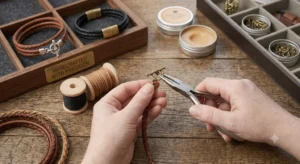
Ready to put your materials to work? Here is a simple, foolproof guide to crafting a professional-grade unisex pendant necklace using a 4mm round braided leather cord and glue-in metal end hardware.
Tools and Materials Required:
4mm round braided real leather cord (approx. 50cm)
1 x Metal pendant with a bail loop larger than 4.5mm
2 x 4mm glue-in end caps with jump rings
1 x Lobster claw clasp & closing jump ring
Professional jewelry adhesive (such as E6000, 2-part epoxy, or flexible instant cyan-acrylate)
Sharp rotary leather cutter or heavy shears
Measuring tape
Essential Care and Maintenance for Braided Leather
Unlike metal chains or synthetic cordage, natural leather is an organic material that absorbs moisture, oils, and environmental factors. To keep your handcrafted braided leather creations looking rich and supple for years to come, share these crucial care tips with your customers or follow them for your personal collection:
Keep Away from Water
Water is the ultimate enemy of dyed natural hides. Never wear your Leather Cords in UK jewelry pieces while swimming, taking a shower, or visiting a sauna. When leather gets saturated with water, the moisture strips away the natural tanning oils inside the hide. As the leather dries out afterward, the fibers contract, making the braid stiff, brittle, and susceptible to cracking along the weave joints.
Apply Conditioner Periodically
Just like a fine pair of leather boots, a braided cord benefits from occasional conditioning. Every few months, place a tiny pea-sized drop of natural beeswax conditioner, neutral leather balm, or mink oil onto a soft microfiber cloth. Gently buff the cloth along the braided weave. This restores moisture, maintains flex, deepens the dye color, and adds a micro-layer of water resistance against sweat.
Store Away from Direct UV Sunlight
Never leave your leather cords or finished jewelry sitting on a sunny windowsill or near direct heat sources like radiators. Prolonged UV exposure breaks down leather dyes rapidly, turning deep blacks into dull grays and fading rich brown hues into washed-out tans. Store your pieces in a cool, dry cloth pouch or a lined jewelry box when not in use.